
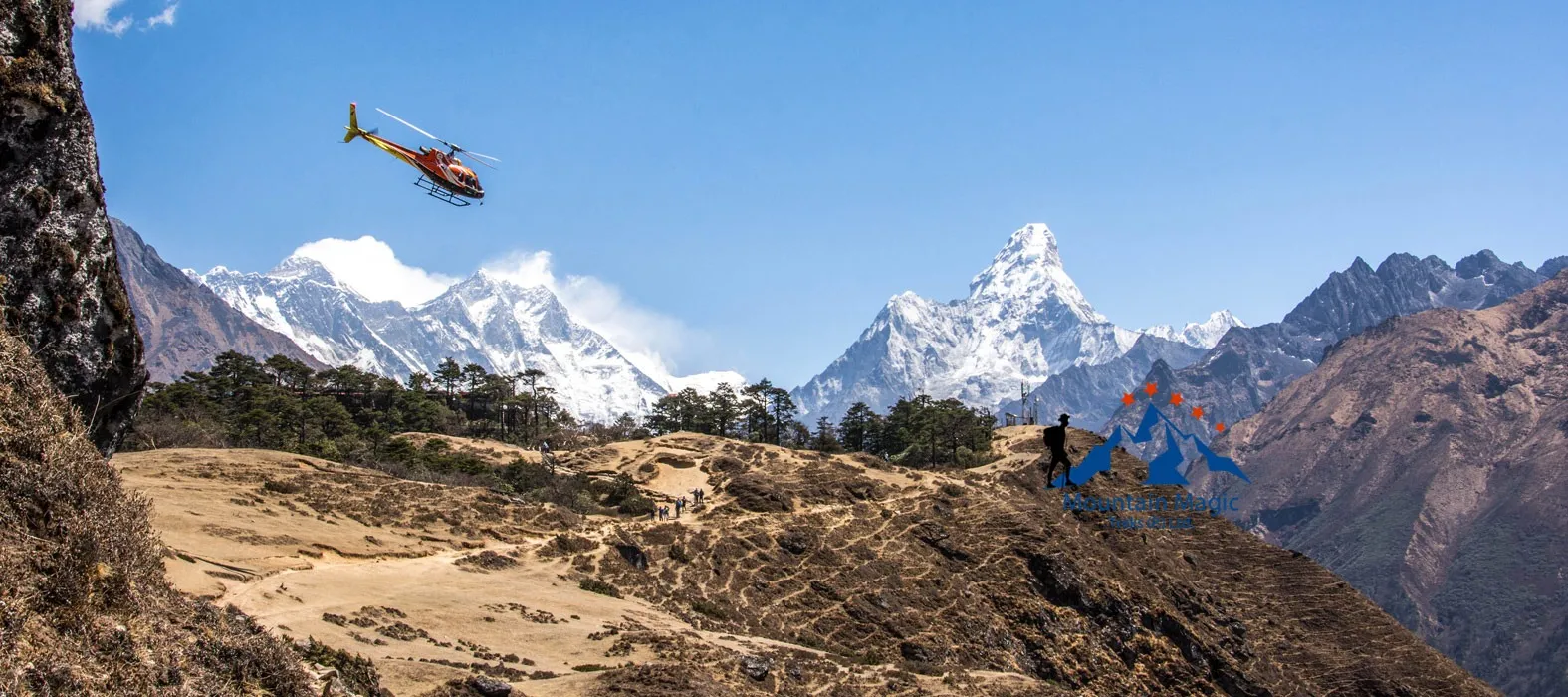
Snow and ice can change the appearance and condition of a mountain trail within a short period. A path that looks clear in the morning may become slippery after snowfall or a drop in temperature. These changes are important on the upper sections of the Everest region, where the trail passes through exposed ground and high-altitude settlements.
The Everest Base Camp Trek with Helicopter Return follows a route from Lukla through Phakding, Namche Bazaar, Tengboche, Dingboche, and Lobuche before reaching Gorakshep and Everest Base Camp. As the route gains elevation, temperatures generally become colder, and snow or frozen patches can affect the walking surface.
Understanding how these conditions develop helps trekkers prepare for the different sections of the journey.
Why Snow Conditions Change Along the Route
Snow does not fall or remain equally across the entire Khumbu region. Elevation, sunlight, wind, temperature, and local terrain all influence how much snow stays on the ground.
Lower Villages and Higher Settlements
The lower sections around Lukla and Phakding often have different conditions from the upper trail near Lobuche and Gorakshep. Lower areas may receive rain when higher locations experience snowfall.
As the route climbs, temperatures usually decrease. Snow may remain longer in shaded areas, especially where direct sunlight does not reach the ground.
The Effect of Sunlight and Shade
Two nearby sections of trail can have different surface conditions. An exposed slope may become clear during the day, while a shaded path remains icy.
This difference matters during early morning departures. Frozen patches can be difficult to recognize when they are covered by a thin layer of fresh snow.
Where Snow and Ice May Affect the Trek
Conditions vary from season to season, so no fixed section should be considered completely free of snow or ice.
Dingboche and the Surrounding Trail
Dingboche sits at approximately 4,410 meters. Its open landscape can experience cold temperatures and snowfall during colder periods.
Paths around the settlement and nearby slopes may become slippery after overnight freezing. Trekkers should follow the guide’s instructions when walking on snow-covered ground.
Lobuche and Gorakshep
The trail toward Lobuche and Gorakshep reaches much higher elevations. Cold conditions can make water on the ground freeze, creating hard patches on rocky paths.
These upper sections may also have loose stones beneath thin snow cover. A white surface does not always reveal what lies underneath, so careful foot placement is important.
The Everest Base Camp Approach
The final approach from Gorakshep toward Everest Base Camp follows a changing glacial landscape. Depending on the season and recent weather, trekkers may encounter snow, ice, stones, or uneven ground.
The route should always be assessed using current local conditions rather than assumptions based on photographs from previous years.
How Snow Changes Walking Conditions
Snow affects more than the appearance of the trail. It can change how much grip footwear provides and how easily trekkers can identify uneven ground.
Fresh Snow Can Hide Obstacles
A fresh layer of snow may cover stones, shallow holes, and uneven sections. This makes it harder to judge where to place each step.
Walk at a controlled pace and avoid following footprints blindly. Earlier footprints may lead across an unsuitable surface if conditions have changed.
Frozen Ground Can Reduce Grip
Meltwater can freeze overnight, leaving hard and slippery patches. These may be difficult to notice, especially in areas with limited sunlight.
Use footwear with suitable traction and trekking poles when recommended. If a section becomes unsafe, follow the guide’s decision to slow down, change direction, or wait.
Equipment for Snow and Ice Conditions
The right equipment depends on the expected conditions and the advice of the trekking team. Carrying unsuitable equipment can be just as unhelpful as carrying too little.
Footwear and Traction
Water-resistant trekking boots with good tread are useful for the uneven mountain trail. They should be properly fitted and tested before the trip.
Depending on current conditions, the guide may recommend additional traction devices such as microspikes. These should be used only when suitable for the surface and when the wearer understands how to walk with them.
Gaiters and Waterproof Protection
Gaiters can help stop snow, small stones, and moisture from entering the tops of boots. Waterproof outer layers also help protect clothing when walking through wet snow.
Keep spare socks in a dry bag. Wet feet can become uncomfortable quickly in cold mountain conditions.
Trekking Poles
Poles can provide additional support when crossing uneven or slippery ground. Adjust their length to suit the slope and avoid placing them on unstable edges.
Poles do not replace proper footwear or safe route decisions. A slippery slope remains dangerous even when someone is carrying two poles.
How Guides Assess Changing Trail Conditions
A local trekking guide plays an important role in evaluating conditions along the route. The decision to continue should consider more than whether the destination is still within walking distance.
Checking the Surface Before Moving
Guides may assess the depth of snow, visibility, slope conditions, and the stability of the walking surface. They also consider how weather has changed since the previous day.
A route that was safe during an earlier visit may require a different approach after fresh snowfall or freezing temperatures.
Adjusting the Walking Plan
Heavy snow, poor visibility, or unsafe trail conditions may require a slower schedule or a change in the day’s plan.
Trekkers should not pressure guides to continue simply to protect a timetable. Mountain safety takes priority over reaching a location at a particular hour.
Snow, Weather, and Helicopter Operations
The helicopter sections of the trip are also affected by mountain weather. Snowfall, cloud cover, wind, and visibility can influence whether an aircraft can operate safely.
Departure From Gorakshep
The return flight from Gorakshep involves operating at high elevation. Weather and landing conditions must be suitable before the aircraft can depart.
If conditions are unsuitable, passengers may need to wait until the flight can operate safely. The exact timing cannot be guaranteed in advance.
Why Flight Delays Matter
A helicopter schedule depends on several factors, including weather, aircraft availability, passenger coordination, and operational restrictions.
The Everest Base Camp Trek with Helicopter Return includes a helicopter return arrangement, but this does not mean that every flight will operate at the originally planned time. Travelers should maintain flexibility and have suitable travel insurance.
Planning for Different Snow Seasons
Snow conditions are not identical every year. The amount of snowfall, temperature changes, and recent weather can influence the actual trail.
Spring Conditions
Spring generally offers favorable trekking conditions, but snow can remain on higher ground after winter. Early-season travelers may encounter frozen sections around the upper settlements.
Autumn Conditions
Autumn is a popular trekking period because of its generally favorable weather. However, cold nights and occasional snowfall can still affect higher elevations, particularly later in the season.
Winter Conditions
Winter brings colder temperatures and a greater chance of persistent snow and ice. Some sections may require additional equipment, and the route may become more difficult.
Travelers planning a winter departure should confirm current conditions with their trekking operator before committing to the itinerary.
Final Thoughts
Snow and ice are natural parts of the Everest region, but their effects vary across the route. Lower villages, high-altitude settlements, and exposed sections near Gorakshep can all experience different surface conditions on the same day.
The Everest Base Camp Trek with Helicopter Return requires travelers to prepare for changing ground conditions rather than expecting a clear trail throughout the journey. Suitable footwear, proper traction when needed, local guidance, and flexible planning all contribute to safer travel.
The most important rule is simple: never let a fixed schedule become more important than safe mountain conditions.
Frequently Asked Questions
1. Does snow fall throughout the Everest Base Camp route?
No. Snowfall varies with elevation, season, and local weather. Higher sections may experience snow while lower villages have rain or clear conditions.
2. Can the trail become icy in the morning?
Yes. Overnight freezing can create slippery patches, particularly in shaded areas and at higher elevations.
3. Do I need microspikes for this trek?
Not necessarily. Their usefulness depends on current trail conditions. Ask your trekking operator or guide whether additional traction equipment is required.
4. Can snowfall delay the helicopter return?
Yes. Snowfall, poor visibility, wind, and other weather conditions can affect helicopter operations. Flights operate only when conditions are suitable.
5. Is the trek possible during winter?
Winter departures may be possible, but colder temperatures, snow, and ice can make the route more demanding. Current conditions and operational arrangements should be confirmed before travel.